How to Withdraw Crypto: A Complete Off-Ramp Walkthrough
How do you withdraw crypto? This guide walks through the full process of transferring assets from an exchange to a wallet, to another exchange, or all the way to fiat, and explains withdrawal networks, addresses, Memo/Tag, fees, arrival times and the mistakes beginners make most often.
In practice, a crypto withdrawal means moving BTC, ETH, USDT or other assets from an exchange account to a personal wallet or another exchange. Turning crypto into cash takes an extra step: you first sell the asset, then move the proceeds out through a fiat channel the platform supports. For beginners, the important part is not memorizing a few buttons, but making sure the coin, withdrawal network, receiving address and Memo/Tag all match. If they do not, the funds may be unrecoverable.
1. A Crypto Withdrawal Is Not the Same as Cashing Out
A crypto withdrawal is essentially a transfer of coins from one account to another on-chain address — for example, sending USDT from Hotcoin to a personal wallet or to another exchange. It is a blockchain transfer, and it only completes once the network confirms it.
Many people who search for how to cash out crypto actually want to know how to sell BTC or USDT and end up with USD, EUR or another fiat currency. That is a sell plus fiat withdrawal process. Whether it is available, and how it works, depends on the platform, your region, your account eligibility and local regulations, so it is not the same thing as an on-chain withdrawal.
If you are not yet familiar with how assets enter an exchange account in the first place, start with Blockchain Exchange Basics: From Sign-Up to Your First Trade for the broader picture.
2. What Is the Standard Process for Withdrawing from an Exchange to a Wallet?
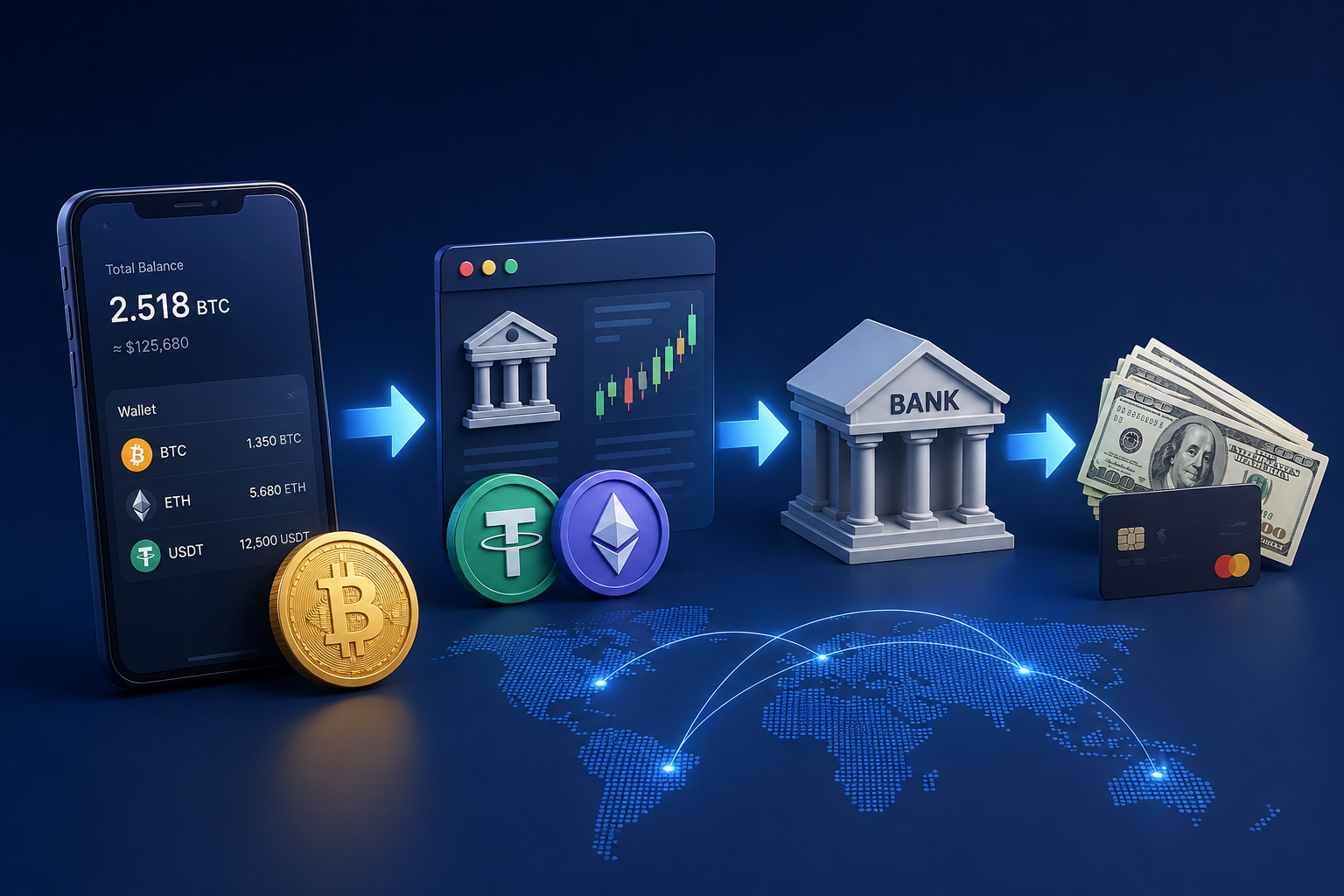
The most common on-chain withdrawal process comes down to: confirm the receiving platform → get the deposit address → confirm the network → submit the withdrawal on the exchange → pass security verification → wait for block confirmations. On Hotcoin, for example, you can open Assets → Withdraw in the app, pick a coin, then fill in the receiving address, network and amount on the on-chain withdrawal page.
Step 1: Get the Deposit Address from the Receiving Wallet First
Do not type an address from memory. Open the deposit page of the target wallet or exchange and select the exact coin you plan to receive. If you are withdrawing USDT, find the USDT deposit page on the receiving platform and copy the address shown there.
One principle matters more than any other here: the coin and network you choose on the sending side must match what the receiving side supports. The same USDT can exist on several different blockchains, and similar-looking addresses do not mean the two are interchangeable.
Step 2: Confirm the Withdrawal Network Matches
The network is one of the easiest places to make a mistake. If the receiving platform shows USDT-TRC20, then select TRC20 on the sending side as well. If the receiving platform requires a different network, follow whatever that platform actually supports.
Do not treat a lower fee as the only reason to pick a network. What matters first is whether the receiving platform supports that network at all. A network mismatch can prevent the assets from arriving, and in some cases they cannot be recovered.
Step 3: Fill In the Address and Withdrawal Amount
Once the network is confirmed, paste the receiving platform's deposit address into the withdrawal page and enter the amount. Some coins or platforms also require extra fields such as Memo or Tag, and if the receiving page shows them, they must be filled in correctly.
Before submitting, check everything again in this order: coin → network → address → Memo/Tag → amount. For large withdrawals in particular, do not copy an address and confirm immediately — send a small test amount first, confirm it arrives, then move the rest.
3. How Do You Withdraw to Another Exchange?
Withdrawing to another exchange works much like withdrawing to a personal wallet; the only difference is that the receiving address comes from the other exchange's deposit page. Select the coin and network there, copy the deposit address and any required Memo/Tag, then return to the sending platform to fill them in.
For example, to move USDT out of Hotcoin to another exchange:
Target exchange: Deposit USDT → select a supported network → copy address/Memo → Hotcoin: Assets → Withdraw → USDT → On-chain withdrawal → select the same network → paste the address → confirm the withdrawal.
Hotcoin's withdrawal page also offers an internal transfer option. If the recipient is also a Hotcoin user, you can send funds internally by email, phone number or UID, and the platform states that this method is fee-free.
4. How Are Crypto Withdrawal Fees Calculated?
Withdrawal costs are usually not a single flat fee. The amount depends on the coin, the network and the platform's current withdrawal rules. What matters is the fee shown on the withdrawal page before you submit, and the amount that actually arrives — do not rely on fee figures posted online months or years ago.
A simple formula helps:
Amount received = withdrawal amount − withdrawal fee
If the page shows a 1,000 USDT withdrawal with a 2 USDT fee, the destination address receives 998 USDT. Note that withdrawal fees follow different rules from trading fees, so spot trading rates cannot be used as an estimate for withdrawal costs.
To go deeper on trading fees, Maker/Taker pricing and real trading costs, see Trading Fees Explained: How to Read a Fee Schedule.
5. Why Has My Withdrawal Not Arrived Yet?
A withdrawal that does not arrive immediately has not necessarily been lost. On-chain withdrawals typically pass through platform processing, transaction broadcasting and network confirmations, so arrival times depend on current network conditions and the receiving platform's crediting rules. (Hotcoin)
If it has been a while, work through these checks in order:
Check the withdrawal record: confirm whether the status is processing, completed or failed.
Check the TXID (transaction hash): if a TXID exists, look up the transaction on the matching block explorer.
Confirm the network is correct: compare the sending network with the receiving platform's deposit network.
Check the confirmation count: the transaction may be on-chain but the receiving platform may still be waiting for the required number of confirmations.
Check the Memo/Tag: some assets require a correct Memo or Tag in addition to the address when depositing to an exchange.
Contact the receiving platform's support: if the chain has confirmed the transaction but the receiving account is still not credited, ask the receiving platform first.
If the withdrawal record shows the transaction is already confirmed on-chain, sending another withdrawal usually achieves nothing. Find the TXID first, then determine whether the hold-up is at platform processing, block confirmation or crediting on the receiving side — that is far more efficient.
6. The 6 Checks to Make Before Every Withdrawal
If you are withdrawing for the first time, work through this six-point withdrawal checklist:
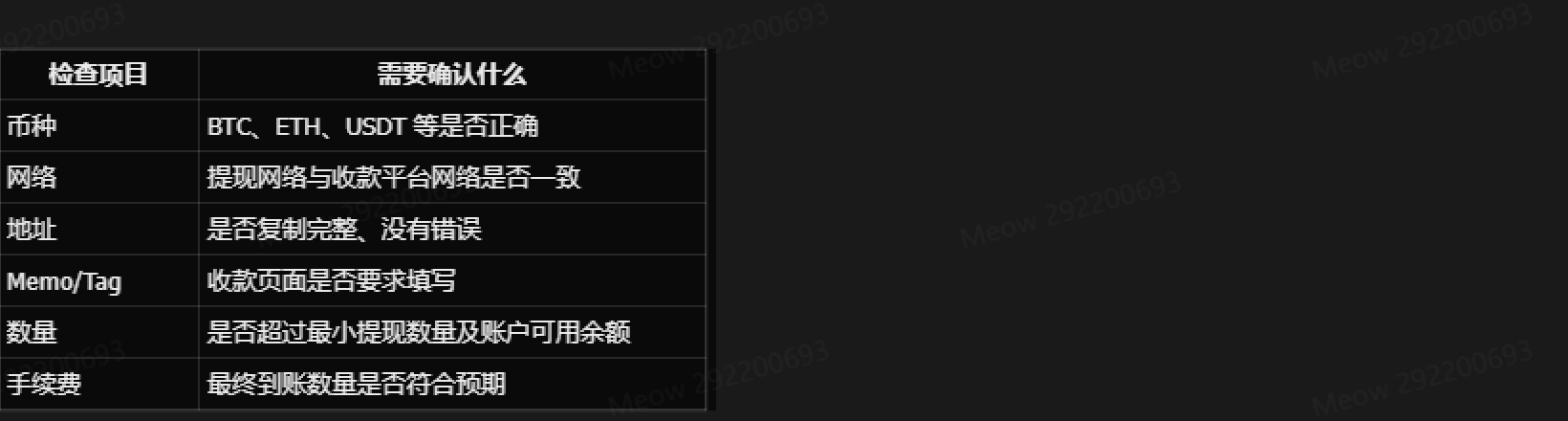
Among these, network and address are the high-risk checks. Assets sent to a wrong address or an unsupported network generally cannot be recalled the way a bank transfer can, and major trading platforms all explicitly tell users to verify address and network compatibility before submitting.
7. How Can You Make Crypto Withdrawals Safer?
The most effective habit is not moving faster, but checking consistently. For a first withdrawal to a new address, send a small test amount and wait until the receiving platform credits it before moving larger sums.
If you withdraw regularly to the same wallet, an address book or withdrawal whitelist reduces manual entry errors. Once Hotcoin's withdrawal whitelist is enabled, withdrawals are only allowed to addresses saved in the address book, and newly added addresses cannot be withdrawn to for 24 hours — which lowers the risk of mistakes or unauthorized withdrawals. (Hotcoin)
At the same time, ignore claims such as "support can change your on-chain address" or "pay the fee first to unfreeze your withdrawal." A genuine exchange withdrawal process does not change because a stranger sent you a direct message. When you see a suspicious prompt, verify it through the platform's official channels.
8. What If You Want to Convert Crypto into CNY?
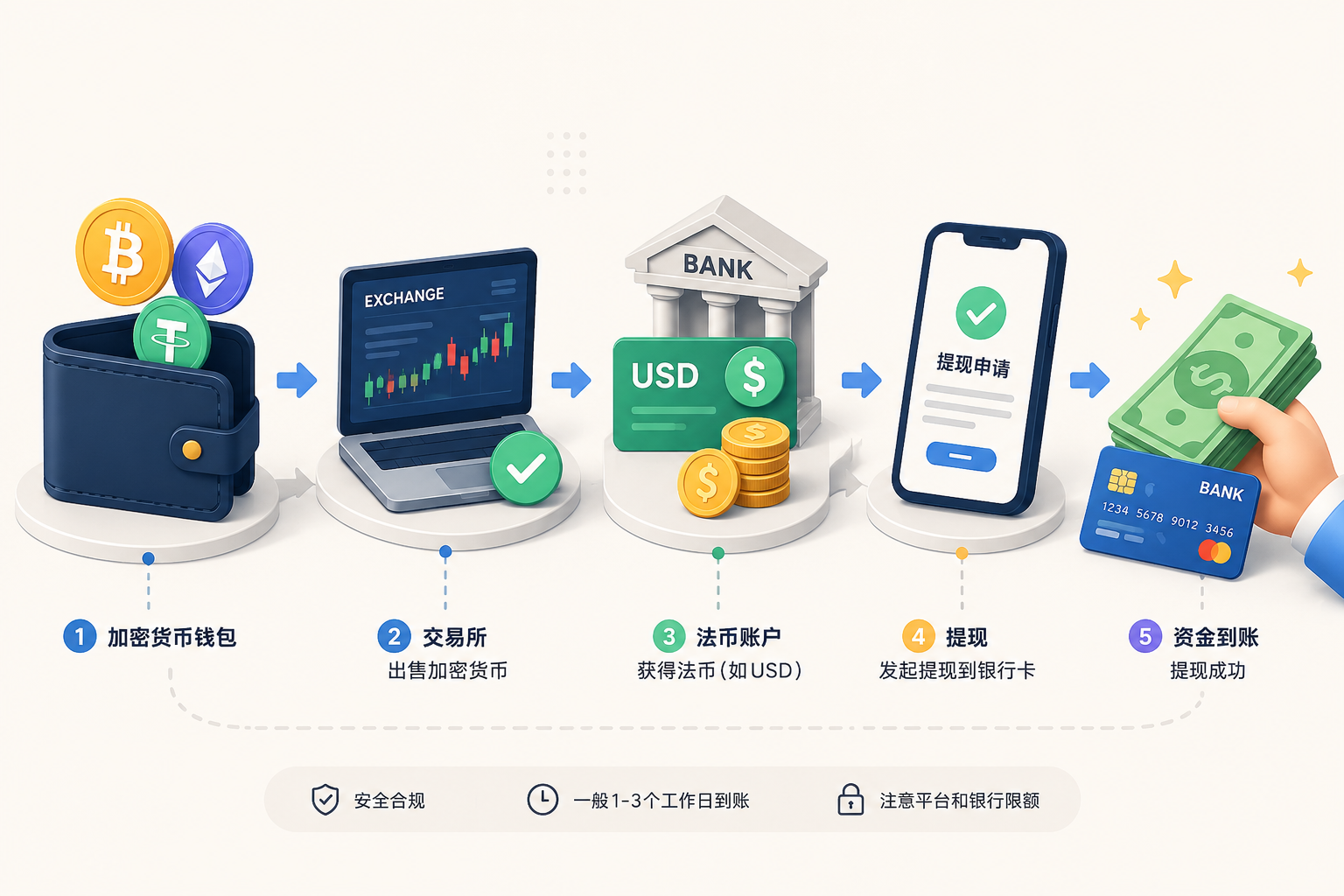
If your goal is not to move coins to a wallet but to convert crypto into fiat currency, you normally go through several stages: sell the crypto, obtain a fiat balance or complete a C2C/P2P trade, then withdraw fiat through a method the platform supports. Available payment methods, regional support and account requirements differ, so an on-chain withdrawal process cannot simply be applied to a fiat off-ramp.
In particular, the fact that a platform offers a fiat trading or payment feature does not mean users in every region can use it. When converting to CNY or another fiat currency, confirm both your jurisdiction's regulatory requirements and the platform's current policy, and do not try to bypass regional restrictions through false identity or other irregular means.
If you want to understand how CNY enters an exchange in the first place, read The Complete Fiat On-Ramp Guide: How to Buy Crypto with CNY in the other direction — together the two articles cover the full path from on-ramp to trading to withdrawal.
Crypto Withdrawal FAQ
1. Do crypto withdrawals charge a fee?
Usually yes. The exact fee depends on the coin, the network and the platform's current rules, and the withdrawal page is the final authority. Costs also differ between networks, so comparing coins by name alone is not enough — check the specific withdrawal network.
2. Which network should I choose for a USDT withdrawal?
No single network fits every case. The right choice depends on the network the receiving platform actually supports. If the receiving platform requires a particular USDT network, the sending side must use that same network, and you should not switch to a cheaper one on your own.
3. What if I entered the wrong withdrawal address?
If the transaction has not been submitted yet, correct it immediately and double-check. If it has already been broadcast on-chain, look up the TXID and transaction status first. Blockchain transactions are generally irreversible, so whether funds sent to a wrong address or unsupported network can be recovered depends on the specifics, and recovery is never guaranteed.
4. Why does the withdrawal show as successful but the exchange never credits it?
First check whether the TXID is on-chain and confirmed, then verify the coin, network and Memo/Tag. If the blockchain has confirmed the transaction but the receiving account is still not credited, contact the receiving exchange to check its deposit records.
5. Can I withdraw coins from an exchange straight to my own wallet?
Yes, as long as both the exchange and the wallet support the asset and network. Before withdrawing, get the correct receiving address from the wallet and confirm that the network selected on the sending platform exactly matches the network the wallet supports.
Summary
What really matters with crypto withdrawals is not a specific platform's buttons, but understanding where the assets come from, where they are going, which network they travel on and how much will actually arrive. Check the coin, network, address, Memo/Tag, fee and arrival status carefully, and most withdrawal mistakes can be avoided before you submit.
For beginners, the safest habits are: test with a small amount when sending to a new address for the first time, review every item before a large withdrawal, and look up the TXID first when something seems wrong. Keep in mind as well that crypto prices are volatile and on-chain transfers carry their own risks — a withdrawal only moves assets, it does not remove investment or market risk.
Recommended
View more